Sports

Category Added in a WPeMatico Campaign

The U.S. Youth Sports Problem That Connects Soccer And Baseball

PHILADELPHIA — Ali Curtis is the vice president of Major League Soccer sporting development. Kenneth Wood is the father of James Wood, an outfielder for the Washington Nationals and a two-time MLB All-Star. Curtis and Wood are involved in different sports but share the same passion: casting a wider net and removing cost as a major barrier to participation. I spoke with them earlier this week during the perfect confluence of baseball and soccer: MLB All-Star Week and the World Cup semifinals. While basketball and football reign supreme in the United States, baseball and soccer have come to epitomize the excesses of a billion-dollar youth sports industry that excludes as many as it attracts because of the spectacular cost of participation. In their own way, for their own reasons, Curtis and Wood are trying to widen the entry to their respective sports. For Curtis, there is an ocean of untapped talent in this country that could make the United States a soccer mega power if gathered, identified and developed. “When it comes to addressing how we develop players in the U.S., it is a really complicated topic. It’s an issue that has been growing for decades,” Curtis said during a recent interview. “You have people that have worked in the sport for 30, 40, 50 years and you have leagues and clubs that have been around. So, the institution of youth soccer has evolved every year. With that, the topic has become very complex.” Related Story Tyler Adams World Cup diary: ‘We win together, we suffer together’ – Andscape Read now A suburban soccer culture has developed in the United States over the past five decades. Many of the players in the United States who reach the highest level of the sport often come from middle- and upper-class economic backgrounds. The talent pool in the rest of the world is far more diverse, consisting of children from poor, middle-class and wealthy backgrounds. How to diversify the United States talent pool is a solvable but complex challenge that starts with acknowledging that there is a problem. “In order to address a really complex problem, it’s really important that you have some collective alignment,” Curtis said. “One of the challenges that we have within the sport — the industry — is that there’s a lot of fragmentation and there’s a lot of division.” The presence of the World Cup in the United States, the mostly solid performance of the U.S. Men’s National Team and the team’s dismal 4-1 loss to Belgium in the round of 16 have put soccer’s youth development system at the center of a debate. There are those who clamor for greater inclusion and those who embrace the status quo and don’t feel the doors need to be opened wider. Rather than focus on those arguments, Curtis, a three-time All-America soccer player at Duke, is fixated on solutions. The greatest challenge in his view is how to widen the pathways to soccer in this country. “Where we are today is more advanced than where we were 10 years ago or 20 years ago or 30 years ago, but we still have some of the same challenges that need to really be addressed,” he said. For all of the talk about youth soccer’s pay-to-play system, Curtis said access is a greater challenge. “Even if player registration fees are reduced, we still have other key challenges that we have to address in a very serious, deliberate and intentional way: where the clubs are located and where the sport is played,” he said. “Players from all communities and all neighborhoods need to have access and the ability to play soccer, which is the greatest challenge. It’s really a complicated topic. It’s easy to say pay to play is bad, but that is really just scratching the surface.” The reality is that participation in all youth sports is expensive. The professionalization of the youth sports industry has dramatically increased the cost of participation. Kenneth Wood found that out when his son decided that his passion was baseball. Each of James’ older sisters played basketball. His middle sister played college basketball for Northwestern. Kenny Wood, who played college basketball at the University of Richmond, discovered that the youth baseball system was an entirely different animal. “The baseball world was a completely different thing,” he said. “The better you get in basketball, the cheaper it becomes because you have the sponsors. My daughter played on a travel team that was Nike-sponsored. We didn’t pay for a flight, not for uniforms, not for tournaments, none of that. But with baseball, the better you are, the more expensive it gets. From our area, it’s $5,000 to pay for travel team now. “James was 11, his team was 12, and they were going to Florida. We were like, ‘He’s too young to go to Florida without us,’ and we couldn’t afford to go, so we’re not sending him to Florida to play in this tournament. It was fine. We trusted the parents, but we were just like, ‘We think it’s too early for him to do that,’ so we kind of kept him close.” James Wood was not immersed in the travel baseball circuit. He played for his local organization, the Olney Boys & Girls Club, where he had the same coach from 7 years old until he was 13. “He made it fun for the kids,” James Wood said of the Boys & Girls Club coach. “I think now they’re getting too serious too early. I mean, there’s no need for a 10-year-old who lives in New York and Maryland to have to go to Florida or Georgia to play. Get good local, be the best team around your area, and then go somewhere else to play. I mean, I just think it’s just gotten too far on that end.” For Wood, the big move was leaving his high school team in the middle of his junior year and transferring to IMG Academy in Bradenton, Florida.

The U.S. Youth Sports Problem That Connects Soccer And Baseball Read More »
AAU Hoops And The Fight Against Perception

As another summer passes, so too does another AAU basketball season. This week in Augusta, South Carolina, Nike’s EYBL Peach Jam, the most prestigious of all summer youth basketball tournaments, will mark the end of the 2026 summer sneaker circuit events. As usual, future college and NBA stars will shine for their respective AAU teams. The Amateur Athletic Union (AAU), a fixture of grassroots basketball, has long been a target for critics. It has been blamed for all of the perceived ills of the sport – most often by people who never played, coached or have even watched AAU basketball. As the number of foreign-born NBA stars has grown, many pundits have lamented the decreasing dominance of American stars, arguing that foreign-player development is superior to how the game is taught stateside. In February, one of America’s all-time basketball greats — two-time NBA champion and 16-time All-Star Kevin Durant — shared his thoughts on the increasingly popular narrative. “All I hear is, ‘AAU is destroying the game; the Euros do it right while the Americans do it wrong,’ ” Durant told ESPN’s Vincent Goodwill during NBA All-Star Weekend in Los Angeles. “It’s a lot of bulls— with that. I can read between the lines on that. It’s a shot at Black Americans. We’re controlling the sport. They’re tired of us controlling the sport. ‘France is coming for you.’ Really? We smacked them boys [in the 2024 Paris Olympics gold medal game].” Durant has a point. A closer look at some of the top American grassroots basketball programs reveal a much more positive space for young talent than we are often led to believe. It’s a space where basketball lifers — often Black men — dedicate their time to helping improve the lives of talented young basketball players, both on and off of the court. Over the past year, Andscape spoke to directors of prominent AAU/grassroots basketball programs — all feeders for Division I colleges and the NBA — to get their side of the story. AAU programs, like Etop Udo-Ema’s Compton Magic, have their detractors, but they also have broadened the talent pipeline, putting more players in front of college coaches and NBA scouts. Compton Magic (Etop Udo-Ema) Before criticizing or defending AAU basketball, it is probably helpful to define what it is. The acronym has become a catch-all to describe — and often complain about — all things related to youth summer basketball. Etop Udo-Ema, founder and CEO of the renowned Compton Magic program, argues that the term itself is outdated. “I don’t even know why we use [the term] AAU. It’s not even AAU anymore. AAU is a part of grassroots,” he said, noting that the organization originally functioned as a low-cost insurance structure for youth sports before the rise of shoe-company-backed circuits and the influx of money transformed the ecosystem. Additionally, summer basketball is now a mix of traditional AAU or grassroots leagues and tournaments, basketball camps, and even high school team events. “There’s a camp on every corner like a bodega now,” said Terrance “Munch” Williams, executive director of the PSA Cardinals, a top grassroots program based in New York City. In his latest book, “Here are the Answers: A Roadmap for Navigating Success in the Business of Youth Basketball,” Williams pulls back the curtain on a circuit that has grown increasingly crowded and complicated. Related Story The new participants in youth sports: Adults gone wild – Andscape Read now For elite prospects, the summer calendar is no longer defined by AAU or grassroots schedules. Instead, it is dominated by an endless stream of invites to high-profile camps. The opportunities stack quickly, from Pangos All-American Camp to the NBPA Top 100, camps hosted by NBA stars Damian Lillard, Stephen Curry, Donovan Mitchell and Chris Paul, and platforms like Elite 24. For many players, camp games now outnumber both high school and traditional AAU competition. That overlap extends into the school year as well. Summer basketball now includes scholastic play in June, followed by additional games in the fall leading into the official season. The lines between high school, grassroots and so-called AAU competition have blurred to the point that many observers group it all under one label, even if that label no longer fits. Regardless of what it’s called — AAU or grassroots — it all gets a bad name. The grassroots space and the people working with the young men and women within it have become punching bags for sports journalists, disgruntled coaches, some ex-players and many basketball fans. Here’s what they say: “Young players are playing too many games!” Blame AAU. “Today’s game lacks fundamentals!” Blame AAU. “Too many injuries!” Blame AAU. “Foreign-born players are taking over the NBA!” You guessed it: Blame AAU. Whether based on a cynical agenda, ignorance or both, the criticism leveled at AAU and those who dedicate their time is, more often than not, unwarranted. While the AAU and grassroots space is not perfect — no industry is — many of the people in leadership positions entered the industry out of a love for basketball and a desire to help improve the lives of kids through the game. Williams, who worked for Teach for America prior to joining grassroots basketball, said: “The biggest thing for me has always been how do you affect lives” in a way that reflects the help he received as an impressionable youth. “You want to take young men and try to give them life lessons to turn them into great men,” he said. Depression, anxiety and the pressures that come with visibility are all addressed at the grassroots level, according to Terrance “Munch” Williams, executive director of the PSA Cardinals. PSA (Terrance “Munch” Williams) For Jamill Jones, director of the DMV-based (District of Columbia, Maryland and Virginia areas) grassroots powerhouse Team Takeover, basketball was instrumental in his education and development, so naturally he wanted to provide similar opportunities to youth from comparable backgrounds. “I always tell people I want to help make productive

AAU Hoops And The Fight Against Perception Read More »

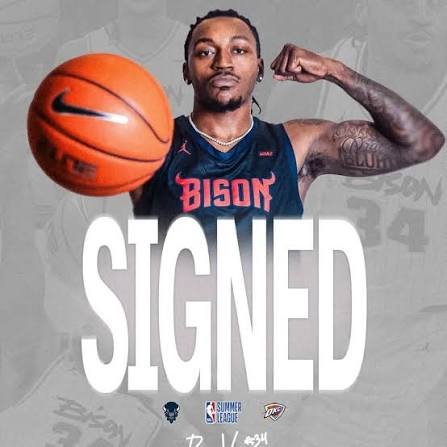
Howard alum Bryce Harris looks to hone skills with Oklahoma City Thunder during NBA summer league

Guard Bryce Harris spent the past five years building a championship résumé at Howard that included three Mid-Eastern Athletic Conference (MEAC) titles and three subsequent NCAA tournament appearances. Now Harris, the 2026 MEAC Player of the Year, is taking the next step in his basketball career. Having signed an NBA summer league contract with the Oklahoma City Thunder, the 6-foot-4 guard is set to play with the team in Las Vegas through July 19. On Sunday, he came off the bench and scored four points in four minutes. Although Harris went undrafted, numerous teams were interested in his skill set and versatility. He averaged 17.3 points and 6.9 rebounds per game for the Bison this past season. Harris said he worked out for about 10 franchises during the pre-draft process and admired the Thunder’s reputation for identifying talent and developing young players. “Honestly, coming from where I’m coming from and playing at an HBCU, a lot of us get overlooked,” he said. “Whether people think it’s a talent gap, whether people think it’s a character gap, whatever the case may be, I’m happy that the Thunder was able to overlook whatever the narrative was and see me as a person, as individual, and as a basketball player, too.” Related Story Chicago Bulls rookie Caleb Wilson is determined to be great – Andscape Read now Harris is one of five players from historically Black colleges and universities (HBCUs) to participate in NBA summer league this year. Former Tennessee State guard Aaron Nkrumah made his summer league debut with the Denver Nuggets. Former Langston guard Orlando Thomas is playing for the Detroit Pistons alongside former Florida Memorial forward Latavious Mitchell. Former Winston-Salem State guard Javonte Cooke, who made his NBA debut last season, is continuing his professional development with the Phoenix Suns during this year’s summer league. Howard men’s basketball coach Kenneth Blakeney believes Harris’ passion for the game and commitment to improving allowed him to reach his full potential during his college career, noting that he often worked out multiple times a day. “I don’t know how many calls I got from Howard security about Bryce being in the gym at really odd hours. It’s 12 o’clock at night and Bryce is here [in the gym],” Blakeney said. “So I think that was one of the biggest kinds of tells for him and his growth and development. “He’s a guy who just lived in the gym. It’s just who he is and how he’s wired to always continue to work and try to really reach his goals and dreams as an NBA player.” Andscape spoke with Harris about his summer league experience, what he hopes to showcase to NBA teams, and the lessons he learned under Blakeney at Howard. This interview has been edited for length and clarity. As a young player, how are you carving out your role on this summer league roster? Honestly, doing whatever they need me to do. … Whatever they need for me to contribute, that’s what I’ll be able to do. I don’t want to overcomplicate anything. As the level goes higher, it’s not necessarily about the talent level. I mean, don’t get me wrong — guys are really, really talented here, but certain things kind of stay the same. How would you describe your transition from playing in college to playing with an NBA franchise? I feel like we have a great culture at Howard that’s very similar to OKC. You have a winning culture. Certain things that are non-negotiables, or certain things that are expected of you as a player are a lot of the same things that the Thunder expects of you as well. So honestly, coming here is like taking another step into becoming a better player. What advice has Blakeney and Howard’s coaching staff given you for this next chapter? Just stay mentally sharp. Make sure your competition level never drops. Make sure this communication, non-communication, whatever you’re strong at, whatever you’re good at — continue to do that at a very high level, right? Also, how can your skills, how can your talent, make people around you better? I feel like that’s a great formula for any player on any team at any level. Leading up to the NBA draft and summer league, which areas of your game did you want to improve? My perimeter defense. Just having an opportunity to be able to guard [positions] one through five, I feel like it’s something that’s huge that I can do. Being able to guard one through five kind of puts you into a plug-and-play situation to be able to guard full court, get ball pressure. Being physical down low in the post is something that probably makes me very versatile. It makes me a valuable player. That’s where I need to hang my hat. Howard has had a few players play in summer league over the last few years. What is it about the program that has helped current and former players have professional success? We kind of started at a lower level in terms of certain resources, but Blakeney has done an amazing job, and Howard has done an amazing job to give us as many resources as possible. There’s certain things that we just don’t take for granted. We try to take advantage of every opportunity a lot more than people who come from other schools, because they may have more resources or more opportunities. Seeing other players and knowing they started out at Howard shows it’s possible. It’s possible to make it to the NBA and play in summer league from Howard. Blakeney kind of showed you the framework in terms of what that work ethic has to look like in order to do that and how to perform. The post Howard alum Bryce Harris looks to hone skills with Oklahoma City Thunder during NBA summer league appeared first on Andscape.

Howard alum Bryce Harris looks to hone skills with Oklahoma City Thunder during NBA summer league Read More »

Charlotte Hornets GM Jeff Peterson has ‘thick skin’ to succeed in NBA

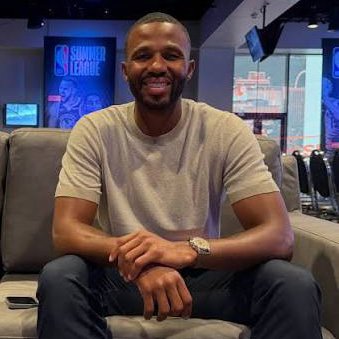
LAS VEGAS — The way Charlotte Hornets general manager Jeff Peterson sees it, it’s in his best interest to ignore the buzz surrounding his surprising trade of popular star LaMelo Ball. Peterson traded the 2022 NBA All-Star from the Hornets to the Minnesota Timberwolves last week for 2024 NBA Sixth Man of the Year Naz Reid, a 2033 first-round pick, three pick swaps and three second-round picks. With the oft-injured Ball off to Minneapolis, young Hornets stars Kon Knueppel and Brandon Miller are now the faces of the franchise. And while Peterson may not have been widely known since being hired in 2024, trading Ball shined the NBA spotlight on the thick-skinned GM. “Fortunately, I don’t get on social media. I don’t really follow it or anything like that,” Peterson, who is 37, told Andscape July 11 from the Thomas & Mack Center during NBA summer league. “I do have people who will send me stuff occasionally, and most of the time it’s as a joke. It’s always funny to me how people who don’t have the full context of a situation can truly weigh in on your decision making. But it’s very thick skin. “Look, when I ultimately made the decision to trade LaMelo, I knew that it was not going to go over well with a lot of the fanbase. I understand and respect their position on it. But the minute you start to feed into that, then you can’t do the job. It’s not that you can’t value other people’s opinion or appreciate their opinion. But if you let that weigh in too much on what you’re doing, you’ll get paralyzed.” Peterson was hired March 4, 2024, to oversee the Hornets’ lengthy rebuilding efforts amid the NBA’s longest playoff drought, having not reached the field since 2016. The Springfield, Missouri, native joined the Hornets after spending four-plus seasons as the Brooklyn Nets’ assistant GM and seven seasons with the Atlanta Hawks, where he was assistant GM, director of scouting and coordinator of basketball operations. Peterson also played collegiately at Iowa, Arkansas and Florida State, and he holds a bachelor’s degree and a master’s degree in marketing. The following is an exclusive sit-down interview with Peterson. He discusses the Ball trade, along with Knueppel and Miller stepping into leadership roles. Peterson also reflects on the pain of falling shy of the playoffs, dreams of a postseason berth, and how he gained strength from the challenges his family faced in the South. Why did this LaMelo Ball trade need to be made? Ultimately, it was a very challenging decision. It’s not like I just woke up in the morning and said, “Oh, we got to get a trade.” I’ve evaluated the team every day since the time I got here. And LaMelo, I’m going to miss him. He’s a great person. Obviously, an enormous talent. But we ultimately made the decision that you know the goal is not just to get to the play-in [tournament]. The goal is being in the playoffs on a consistent basis and then ultimately contend for championships. When I entered dialogue with [Minnesota Timberwolves president of basketball operations] Tim Connelly, and we were able to get Naz Reid, and of course those picks, I just felt like it was something we couldn’t pass up in our life cycle right now. Do you see Kon and Brandon as the co-faces of the Hornets now, and are you comfortable with that? I’m very comfortable. [Hornets head coach] Charles [Lee] and I had a conversation with both of them knowing that these trades can be challenging. Sometimes I do think we forget that we’re human beings dealing with this stuff — lives and its emotions. Those guys are friends and they are in the locker room every day. At the same time, Charles and I kind of explained, “We believe in you guys, too. You guys are here. We want to continue to see you guys grow. This is going to challenge you guys. You guys got to continue to get better.” We wouldn’t have made that trade if we didn’t feel comfortable with what they can continue to be developing into. What goes through your mind when you make a trade of that magnitude? It’s a lot, because on the one hand, LaMelo is amazing. I love LaMelo and his personality, and of course the player. We had some great conversations. So, a little torn. You get pulled from an emotional standpoint. But at the same time, it is my responsibility to do what’s best for the organization. So, that goes back to having tough skin and some conviction with your decision knowing that you’re not going to get all of them right. I’m not going to get every draft right, every trade right, every free agent, whatever it is. But I do feel confident that the work and the preparation that I put in — and my group has put us — where ultimately this is the right thing for the franchise. Is the acquisition of Naz Reid an underrated move in this trade? Completely agree. He’s someone I’ve always appreciated. He’s one of my favorite stories in the NBA. Go undrafted. He’s finished top five in [NBA] Sixth Man of the Year running three years, and he won it a couple years ago. He’s been in the Western Conference finals a couple times. He’s a guy who has changed his body, has changed his habits, his approach. So, I like to bet on guys like that. Chip on the shoulder, got it out the mud, found a way to have success. So, I could not be more thrilled to have him with us. And I know he’s going to make us better. Did re-signing veteran point guard Coby White (to a three-year, $74 million contract) make that trade decision easier? No, because I’ve always loved Coby, too. And I said this from the time when we traded for Coby [in February], he was

Charlotte Hornets GM Jeff Peterson has ‘thick skin’ to succeed in NBA Read More »

Jaylen Brown The Face Of An NBA Divide

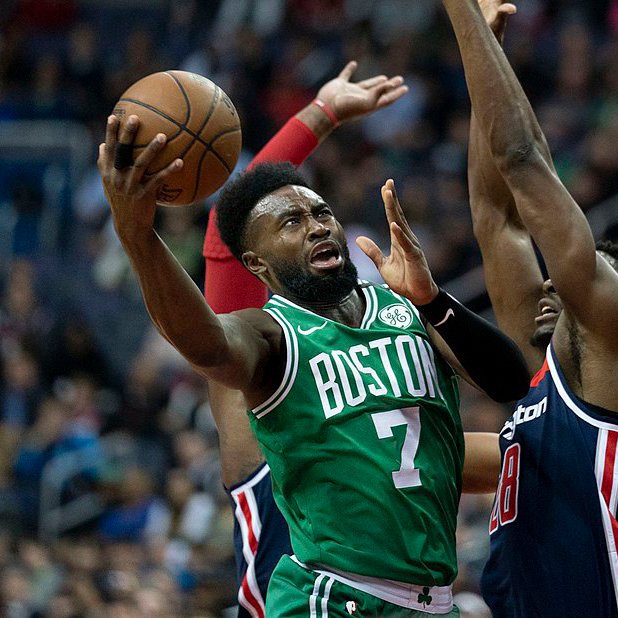
Brad Stevens’ eyes told the entire story. The anguish on the face of the Boston Celtics’ president of basketball operations seemed authentic. He was speaking to the media for the first time since the franchise traded star forward and 2024 Finals MVP Jaylen Brown to its generational division rival, the Philadelphia 76ers, for Paul George and a swath of draft picks. In the days following the blockbuster offseason move, Brown became an avatar for multiple conversations: race, basketball aesthetics, intellect and his contract. For Stevens, the move reflected what many Americans feel at the moment — albeit from the vantage point of a historic, multibillion-dollar franchise. For Stevens, it came down to the money and how excruciatingly difficult managing it has become in the current NBA. Whether he made the right decision, Stevens admitted, only time will tell. “When I looked at our team and where the league was heading … the path looked a little bit more challenging to me,” Stevens said Monday, seated alongside Celtics owner Bill Chisholm. “I might be wrong. I’m not going to stand up here and be defensive about that, but the path looked a little bit more challenging, with 70 percent of our cap and such a high percent of our usage tied into two players [Brown and Jayson Tatum].” Stevens continued: “The reality in this day and age at the NBA, and you could see it obviously with the last couple of champions … you have to do a great job of building out depth that can hopefully replace the irreplaceable individual. And that’s not an easy thing to do. And that’s absolutely nothing against Jaylen. If you have Jaylen Brown on your team, you should feature him, you should use all those possessions, and you should approach things that way. But I think the importance of depth and, then obviously, we have to continue to work on ways to diversify our attack overall.” Stevens’ explanation didn’t include the critiques of Brown’s actual on-court game, from his ball-handling to his usage rate. It wasn’t about whether Brown could be the lead act on a championship team, because he’d already won only the franchise’s second Finals MVP since the Larry Bird era. Rather, Stevens’ argument was centered on the now-infamous NBA second apron and its effects on roster construction. It was a fascinatingly practical answer for a debate that, in the initial response to the trade, had previously been enveloped in anything but practicality. Were there tensions between the team and the player bubbling slightly below the surface? Of course, there were. But in the moment, Stevens spoke from the perspective of a front-office executive at one of the most powerful brands in American sports. Everyone else spoke as critics, economists, media analysts, historians, sociologists and cultural commentators. The truth, perhaps, lives in a hazy, humid gray area in the middle that few venture into. Stevens, maybe inadvertently, revealed how many talking points had become layered into Brown and the Celtics. He didn’t erase or deny any of them. Ultimately, Stevens made it clear that Brown, the franchise’s top pick in the 2016 NBA draft, had become a pathway for all. The post appeared first on Andscape.

Jaylen Brown The Face Of An NBA Divide Read More »