
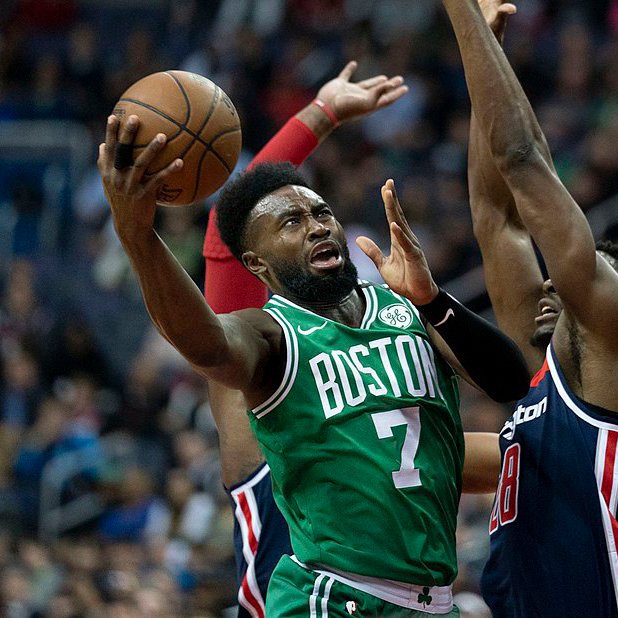
Brad Stevens’ eyes told the entire story. The anguish on the face of the Boston Celtics’ president of basketball operations seemed authentic. He was speaking to the media for the first time since the franchise traded star forward and 2024 Finals MVP Jaylen Brown to its generational division rival, the Philadelphia 76ers, for Paul George and a swath of draft picks.
In the days following the blockbuster offseason move, Brown became an avatar for multiple conversations: race, basketball aesthetics, intellect and his contract. For Stevens, the move reflected what many Americans feel at the moment — albeit from the vantage point of a historic, multibillion-dollar franchise.
For Stevens, it came down to the money and how excruciatingly difficult managing it has become in the current NBA. Whether he made the right decision, Stevens admitted, only time will tell.
“When I looked at our team and where the league was heading … the path looked a little bit more challenging to me,” Stevens said Monday, seated alongside Celtics owner Bill Chisholm. “I might be wrong. I’m not going to stand up here and be defensive about that, but the path looked a little bit more challenging, with 70 percent of our cap and such a high percent of our usage tied into two players [Brown and Jayson Tatum].”
Stevens continued: “The reality in this day and age at the NBA, and you could see it obviously with the last couple of champions … you have to do a great job of building out depth that can hopefully replace the irreplaceable individual. And that’s not an easy thing to do. And that’s absolutely nothing against Jaylen. If you have Jaylen Brown on your team, you should feature him, you should use all those possessions, and you should approach things that way. But I think the importance of depth and, then obviously, we have to continue to work on ways to diversify our attack overall.”
Stevens’ explanation didn’t include the critiques of Brown’s actual on-court game, from his ball-handling to his usage rate. It wasn’t about whether Brown could be the lead act on a championship team, because he’d already won only the franchise’s second Finals MVP since the Larry Bird era.
Rather, Stevens’ argument was centered on the now-infamous NBA second apron and its effects on roster construction.
It was a fascinatingly practical answer for a debate that, in the initial response to the trade, had previously been enveloped in anything but practicality.
Were there tensions between the team and the player bubbling slightly below the surface? Of course, there were.
But in the moment, Stevens spoke from the perspective of a front-office executive at one of the most powerful brands in American sports. Everyone else spoke as critics, economists, media analysts, historians, sociologists and cultural commentators. The truth, perhaps, lives in a hazy, humid gray area in the middle that few venture into.
Stevens, maybe inadvertently, revealed how many talking points had become layered into Brown and the Celtics. He didn’t erase or deny any of them. Ultimately, Stevens made it clear that Brown, the franchise’s top pick in the 2016 NBA draft, had become a pathway for all.
The post appeared first on Andscape.